
How to Keep Your Stamina Doing Hard Physical Labor All Day — Hard Mile Health
There's a pattern on job sites that nobody talks about out loud: the mid-30s guys are often outworking workers a decade younger. Not because of raw strength — but because of what they do before, during, and after the shift. Sleep, nutrition, supplements, gear, and a mental framework for sustaining output across 10-hour days. This is what that actually looks like in practice.
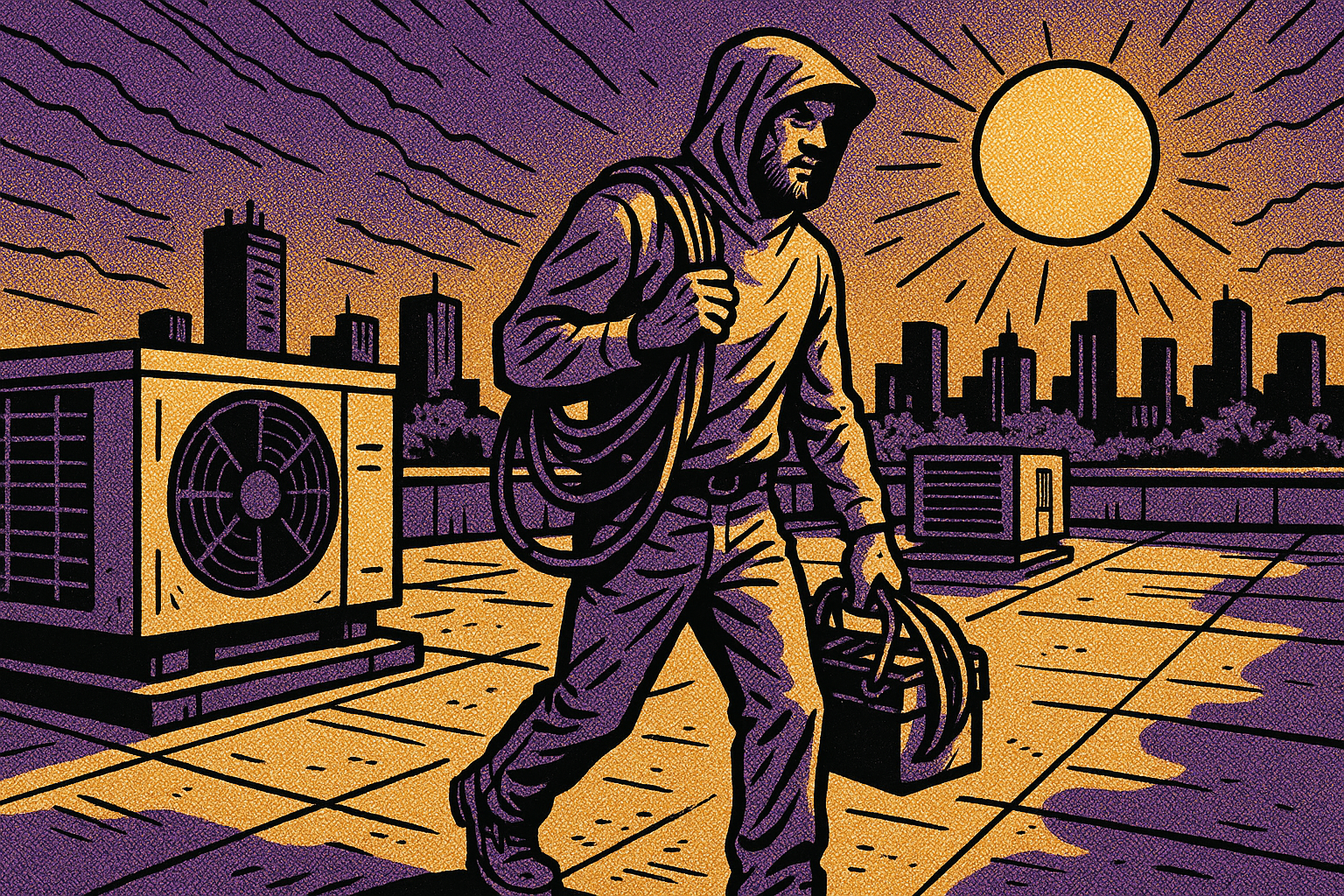
What follows is a real routine from a working tradesman doing commercial rooftop work — physical, repetitive, often in brutal heat — and why each piece of it matters.
The Foundation: Sleep Comes Before Everything Else
In bed by 8 to 9 PM. Asleep by 9:30. Up somewhere between 4:15 and 4:45 AM depending on how hard the week has been.
That's a strict schedule, and it's non-negotiable on weeknights. No alcohol. No marijuana. Both disrupt sleep architecture — alcohol in particular fragments REM sleep, which is where physical recovery happens. The tradeoff is real: one night of drinking might feel fine in the moment, but it costs you Thursday.
"If I'm doing pretty hard labor all week, I notice I'll hear my alarm later as the week goes on. That's the signal my body is catching up."
This isn't just anecdotal. A 2010 study published in the ASCE Journal of Construction Engineering and Management found that construction workers suffer measurable performance decrements — and higher accident risk — due to inadequate sleep. The threshold was consistent with other occupational research: under 7 hours, and your physical output degrades. The research didn't distinguish between young and experienced workers. Sleep debt hits everyone.
Bottom line: If you want to still be going strong at 3 PM on Friday, the decision that matters most was made at 9 PM Monday night.
The Morning Stack: What Hits the Body Before the Job Site Does
Four protein waffles with real Irish butter. High-fat, high-protein, enough carbohydrate to load the muscles for sustained output. The butter isn't decoration — fat slows glucose release and keeps energy stable over a long morning rather than spiking and crashing.
Coffee. At least one cup.
And then the drink: a 1,500ml water bottle loaded with three things mixed together — collagen peptides, creatine monohydrate, and a coconut electrolyte hydration packet. That bottle gets finished by 8:30 or 9 AM on the job site.
Why Creatine for a Physical Job
Most people associate creatine with the gym. The physiology applies directly to trades work. Creatine supports the phosphocreatine energy system — the same system that fuels repeated bursts of high-effort output, which is exactly what a day of carrying bricks, building racking, or swinging a hammer looks like. A 2025 double-blind, randomized crossover trial published in PMC found creatine monohydrate supplementation reduced muscle soreness and accelerated recovery of lower limb strength between efforts. That's not a gym result — that's what you need at hour seven of a physical day.
Why Collagen Peptides
Tendons and connective tissue take the quiet abuse in physical work — not the dramatic injury, but the constant repetitive load that compounds over weeks. Collagen peptides support the body's ability to repair and maintain that tissue. A 2026 systematic review published in MDPI Sports found collagen supplementation positively influenced tendon mechanical properties and reduced pain in tendon-related conditions. For someone bending, carrying, and climbing every day, this is the long game — keeping the connective tissue functional years from now.
💊 The Morning Stack
- Collagen peptides — tendon and connective tissue support for repeated daily load
- Creatine monohydrate — sustained high-effort output, faster recovery between efforts
- Coconut electrolyte packet — hydration that actually absorbs, not just water volume
Opens Amazon.com in a new tab. Affiliate link — we may earn a commission at no extra cost to you.
Lunch: Keep It Light or Pay for It
Pack your own lunch. Every time. The alternative — fast food, vending machines, gas station food — is a recipe for sluggishness in the afternoon when you need to maintain output.
The formula is simple: a real sandwich on good bread, quality deli meat, cheese, sweet relish, spicy mayo. Banana or protein granola bar on the side. Maybe both.
The key principle is keeping lunch light enough that you're not fighting your digestive system while doing physical work. Heavy meals redirect blood to the gut. On a labor-intensive afternoon, that means burping, sluggishness, and a body that's splitting its resources between digestion and output. Light lunch, sustained energy. Heavy lunch, 2 PM wall.
Bottom line: If you're bending over building racking all afternoon, you don't want a chicken sandwich and fries sitting in your stomach.
The Mental Framework: How to Actually Push Through
Two mindset tools that work in practice, not just in theory.
"I'm Getting Paid to Exercise"
Reframing hard physical work as training — rather than suffering — shifts how the effort registers. You're not grinding through misery; you're getting paid to build capacity. The work is the workout. This isn't just motivational fluff: research on effort perception shows that framing influences actual physical performance. When you experience effort as meaningful rather than pointless, you sustain output longer.
Push Through to Earn the Next Task
When you're doing something miserable — bending over all day laying racking on a flat roof in August — push hard to finish it. Because the next task might be standing upright moving bricks from one point to another. It's still work, but it's different work, and different movement patterns provide functional recovery. You don't get to the easier task by going half-speed on the hard one. You get there by finishing it.
Don't Be the Dead Weight
The third mental driver is accountability to the crew. Arriving on a new job site and lowering the group's output is a specific kind of failure. The standard should be: when you show up, the numbers go up. That kind of performance accountability has intrinsic motivation properties — it's not about ego, it's about being a person whose presence improves a situation rather than draining it.
"I wanna come, get shit done, and have fun with the guys. Those aren't opposites."
Gear: The Difference Between 85 Degrees and Heat Exhaustion
What you wear on a physical job matters more than most people acknowledge until it's 95 degrees and they've made the wrong choice.
Boots: Fit Over Brand
Wide feet require boots sized specifically for them — not standard fit bought up a size. The difference matters across 10 hours of standing, climbing, and carrying. The Bruntz Coyote boots with extra-wide fit, with factory insoles removed to create more room, is the configuration that works here. Boots that pinch or compress your feet degrade your output across the full day and compound into real joint and foot problems over a career.
Truewerk T1 WerkPants for Summer
The T1 is Truewerk's lightest-weight work pant, designed specifically for hot weather. Lightweight, flexible, moisture-wicking. At 70 to mid-80 degrees, you won't notice much sweat. In the 90s, they're the difference between sustainable output and a miserable afternoon.
Here's the data point: on one 95-degree rooftop day — possibly over 100 with heat index — after a full hard shift, the salt content scraped off the T1 WerkPants was visible. If those had been thick jeans or heavy cargo pants, the outcome would have been significantly different. Heavy fabric in extreme heat isn't just uncomfortable — it accelerates fatigue and increases heat illness risk.
For three-season use, the T2 is better — heavier fabric, double-layer knees, more abrasion resistance. The T1 is the summer-only choice.
Sun Hoodie
UPF-rated sun hoodies for outdoor work are consistently underestimated. They keep UV radiation off your skin across a full outdoor shift, which matters both for long-term skin health and for keeping your core temperature lower than bare skin in direct sun would allow. Once you work a full summer in one, going back doesn't make sense.
Recovery: It's Simpler Than You Think
After a 10-hour physical day: shower, eat dinner, decompress. That's it.
No elaborate stretching protocol. No ice bath. No foam rolling session. Just get off your feet, eat something real, and let your nervous system wind down before bed. For someone going to bed by 9 PM, that means the evening is short — but the morning is strong.
The one thing that does happen every night, 2 hours before bed: magnesium glycinate.
Why Magnesium After Physical Work
Physical labor depletes magnesium two ways: through sweat and through muscle contraction. Both happen at scale across a hard day. A 2025 randomized, placebo-controlled trial published in the Journal of Sleep Research (Tandfonline) found that 28 days of magnesium bisglycinate supplementation produced statistically significant improvements in insomnia severity scores compared to placebo. For physical workers — who are chronically losing magnesium through sweat and contraction — the effect is likely more pronounced than in the general population.
The glycinate form absorbs significantly better than cheaper oxide forms (which have roughly 4% bioavailability) and doesn't cause the digestive issues that magnesium citrate sometimes does at higher doses.
Take it 2 hours before bed, not right at bedtime. It works by activating the parasympathetic nervous system gradually — the "rest and digest" state that signals to your body it's time to recover. Timing it right means you're primed for sleep when you hit the pillow, not still waiting for it to kick in.
🌿 Magnesium Glycinate — Nightly Recovery
The glycinate form, not oxide. Absorbs well, no gut issues, supports sleep and muscle recovery for physical workers.
- Timing: 2 hours before bed — not right at bedtime
- Why glycinate: Bioavailability far higher than oxide (the cheap form)
- For workers: Sweat and muscle contraction deplete magnesium daily
Opens Amazon.com in a new tab. Affiliate link — we may earn a commission at no extra cost to you.
Why Experience Wins
Raw physical capacity isn't the limiting factor on most job sites. Habits are. The experienced tradesperson who's still working hard at 3 PM on Friday has almost never found a secret hack — they've built a system around the work. Early bedtime, real food, the right supplements, gear that doesn't fight them in the heat, and a mental approach that converts misery into momentum.
The younger worker who fades by noon usually has better raw numbers. They're just spending them faster with no system to replenish them. Sleep debt compounds. Bad food competes with performance. Cheap gear creates friction across the whole shift.
None of this is complicated. It's just habits built around a reality most people don't take seriously until their body forces them to.
Frequently Asked Questions
How do you keep your energy up during a 10-hour day of hard physical labor?
What supplements help with physical labor endurance?
Why do some experienced tradespeople outwork younger coworkers?
Does sleep really matter that much for physical job performance?
What work pants are best for hot weather physical labor?
What boots are good for tradespeople with wide feet?
Related Articles
- → I Woke Up Ready to Go on Monday After a Weekend Bender — I Think It's the Magnesium
- → The Complete Magnesium Guide for Workers — Glycinate vs Citrate vs Oxide
- → Collagen Peptides for Tendon Recovery — Timing, Dosage, and What the Research Says
- → Sun Hoodies for Outdoor Workers — UPF, Heat, and Why It Matters
Written by Tim
Founder of Hard Mile Health. I've spent years in physically demanding work and learned most of what's on this site the hard way — through injuries, bad advice, and a lot of research. I write about what actually works, backed by real studies and personal experience.