
I Wore a Sun Hoodie on a Flat Roof in 87-Degree Heat — Here's What Happened
My Supervisor Asked If I Was Dying. I Said No.
End of a long day on a commercial flat roof. Full sun the entire shift. My supervisor walked over and said, "Are you sweating your ass off in that thing?"
I was wearing a long-sleeve sun hoodie. Full coverage — hood up, sleeves down. In 87-degree heat with humidity. He was looking at me like I had lost my mind.
"No," I said. "I feel great."
He did not believe me. But it was true. And it was the second day I'd worn it on that job, so I had a direct comparison — the day before, without it, had been a completely different story.
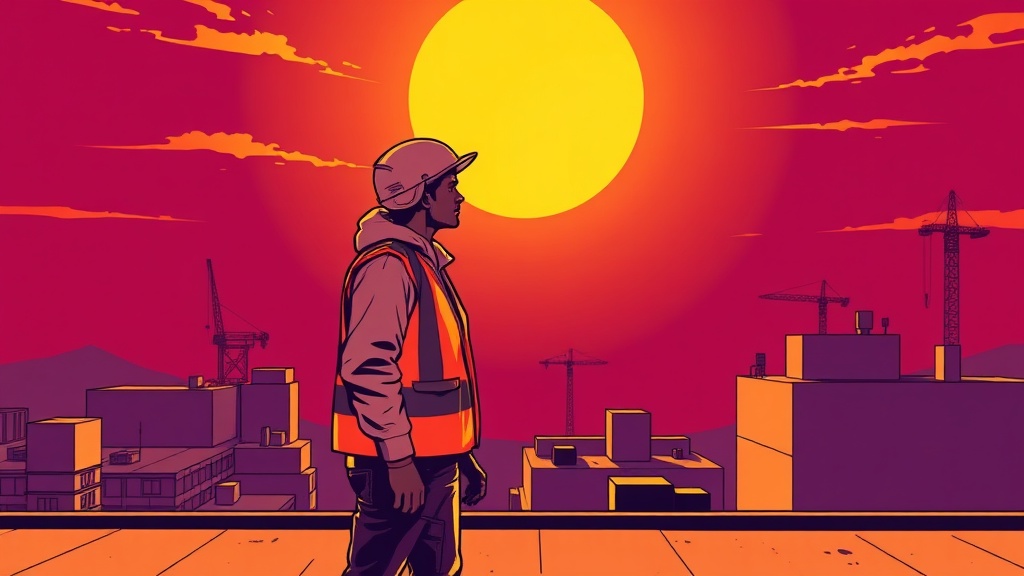
What the Job Actually Looked Like
This was commercial flat roof work. No shade. Nowhere to escape the sun — you're up there and that's it for the whole shift. The work involved carrying bricks from one area of the roof to another, placing them per the plans, and team-carrying and installing 80-pound modules all day.
It's physical work. You're sweating before 8 AM. By midday the roof surface itself is radiating heat up at you from below while the sun hits you from above. It's about as direct and sustained sun exposure as you can get on a job site.
Day One — Without the Hoodie
I forgot sunscreen. Not a big deal for one day, right? I figured I'd tough it out.
By late morning I could feel my neck starting to burn. That specific sensation where your skin starts to feel hot to the touch and just slightly tight — like it's complaining. My nose was getting it too. By end of day, my neck and nose were super hot and noticeably burned. Not blistering, but burned enough that I could feel it when I touched them.
The other thing I noticed: I was killing water. More than usual. Dehydrating faster than I expected, even for a hot physical day. I kept going back for more. When you're losing moisture through both sweat and radiation-stressed skin, your body's working harder just to keep temperature regulated.
It wasn't a disaster. But it was uncomfortable, and I knew by end of day that tomorrow needed to be different. The long-term skin cancer risk for outdoor trades workers is real — I wasn't trying to add to my career UV debt.
Day Two — With the Sun Hoodie
Same job. Same roof. Same conditions — 87°F, decent humidity, full sun all day. I threw on the sun hoodie over a moisture-wicking short-sleeve t-shirt and put my high-vis vest on over it.
I kept the hood up most of the day. When a breeze came through, I could feel it catch in the hood and cool the back of my neck — which the day before had been sunburned and burning. The hoodie was blocking the radiant heat from hitting my skin directly while still letting air move.
I was sweating. You're always sweating. But way less than expected for the conditions. And I didn't feel the creeping dehydration from the day before. Normal water intake, normal energy levels.
That's when my supervisor walked over and asked if I was dying in that thing. I wasn't.
Why Covering Up Actually Keeps You Cooler
This is the part that sounds backward until you think about it.
I remember thinking at the end of day two: I think the Middle Eastern guys who live in the desert are onto something wearing full robes. They've been covering up in hot climates for thousands of years. Not because they had to — because it works.
Here's the science behind it. When you're in direct sun, your bare skin is absorbing radiant heat — the heat from solar radiation hitting you directly, separate from the air temperature. A lightweight, breathable fabric blocks that radiant load before it reaches your skin. Your skin temperature stays lower, your body has less work to do to maintain core temperature, and you sweat less.
On top of that: evaporative cooling. Sweat evaporating off fabric works the same way as sweat evaporating off skin — it pulls heat away. But fabric can spread that moisture over more surface area and slow the evaporation rate, which actually makes the cooling more efficient than bare skin that dries quickly.
The key word is breathable. A cotton hoodie traps heat. A UPF-rated sun hoodie made from lightweight technical fabric does the opposite — it acts as a heat shield and an evaporative cooling layer simultaneously.
Counterintuitive. But it's why desert cultures figured this out centuries ago, and why I'm not going back to bare arms on a roof.
The Practical Details — Site-Ready Setup
A few things worth knowing if you're going to try this on a job site:
What to wear underneath. Moisture-wicking short-sleeve t-shirt. Not cotton — cotton stays wet and gets heavy. A synthetic or merino base layer moves sweat away from your skin and keeps you from feeling damp all day. The sun hoodie does the sun protection work; the base layer handles moisture management.
High-vis compatibility. This matters for anyone working on a site with PPE requirements. A slim-fit sun hoodie fits cleanly under a standard high-vis vest. No bulk, no restriction, fully compliant. I wore mine all day with a high-vis over the top and nobody had a comment until my supervisor noticed I wasn't melting. You don't have to choose between sun protection and site safety requirements. Layering PPE-compatible gear is a skill in itself — this one is easy.
The hood. Keep it up. This was the biggest game-changer for me. The hood blocked direct sun on my neck, which was the worst burn area the previous day. And when a breeze came through, it caught in the hood and cooled the back of my neck in a way that bare skin never would. Hood up sounds hot. It isn't.
When It Doesn't Work — Hot, Humid, No Breeze
This is an update from a week in the high 80s with barely any wind. I want to be straight with you: the sun hoodie has a condition where it struggles.
Hot, humid, and still. When the air temperature is in the upper 80s, humidity is high, and there's no consistent breeze — we're talking less than 10 mph gusts — the hoodie stops doing its job well. The evaporative cooling mechanism depends on airflow moving through the fabric. Take away the breeze and you're just wearing a layer. In those conditions I was generating more heat than the hoodie could manage.
The day that actually worked better for those conditions: an Ergodyne Chill-Its cooling towel. I used it a few different ways — tucked up into my hat so it hung down the back of my neck, draped inside my shirt down my back, and just looped around my neck and left to drape. It made a real difference. Direct evaporative cooling right on skin, no airflow required.
My honest take after more time with both: the sun hoodie is the right tool when there's at least some consistent breeze to work with. The cooling towel wins when it's dead still and muggy. Know which conditions you're walking into and pack accordingly — they're solving different problems.
🧊 When It's Hot and Still — Ergodyne Chill-Its Cooling Towel
This is what I reached for on the hot, humid, no-breeze days. Tuck it into your hat, drape it down your back inside your shirt, or loop it around your neck. Works without any airflow — direct evaporative cooling on skin.
- Best for: High humidity, little to no breeze, upper 80s+
- How I use it: Tucked in hat down the neck, or draped inside shirt down the back
- Works with: The sun hoodie on marginally better days — keep both in your bag
- Heads up: Ships pre-wetted — that's normal, not a defect. Long-term durability still TBD; I'll update this when I have more uses on it.
Opens Amazon.com in a new tab. Affiliate link — we may earn a commission at no extra cost to you.
My Honest Take
I own one of these. I wish I owned five.
That's the whole endorsement. I'm not going to tell you it changed my life or that every day on a roof is now a breeze. It's still physically demanding, hot work. But this one piece of gear took a real problem — sun exposure, accelerated dehydration, end-of-day burned skin — and made it not a problem. On a day I forgot sunscreen, I would have been fine.
And we're not even in peak summer yet. It was 87°F with humidity and the hoodie performed this well. I don't want to think about what July and August look like without it.
The Science, Briefly
Outdoor construction and roofing workers are among the highest-risk occupations for skin cancer due to cumulative UV exposure. The neck and forearms — exactly what a sun hoodie covers — are the highest-risk areas. A UPF 50+ rating blocks 98% of UV radiation.
Beyond cancer risk: radiant heat load is a real physiological stressor. In direct sun, solar radiation can add the equivalent of several degrees to your effective heat exposure, separate from air temperature. Your body burns through more fluid fighting that heat. Blocking it at the surface level — before it hits skin — reduces the internal work your body has to do to stay regulated.
Evaporative cooling through fabric is a well-documented mechanism. Bedouin and desert-dwelling populations have used this principle for centuries. Modern technical fabrics engineered for UPF and moisture-wicking simply optimize what they figured out empirically: coverage in breathable fabric beats bare skin in the sun.
If you want the deeper read on UV exposure risks for outdoor workers, we covered it in detail here: Sun Exposure and Skin Cancer Risk for Construction Workers.
What I'm Using
☀️ Sun Hoodie — My Specific Pick
This is what I wore on the roof. Lightweight, UPF rated, hood stays up, fits under a high-vis vest without bulk. Only own one. Wish I had five.
- Wear over: Moisture-wicking short-sleeve t-shirt
- Wear under: High-vis vest — fully compatible
- Conditions tested: 87°F, full sun, high-humidity flat roof, all day
- Result: Supervisor thought I was suffering. I wasn't.
Opens Amazon.com in a new tab. Affiliate link — we may earn a commission at no extra cost to you.
Frequently Asked Questions
Does wearing a sun hoodie actually keep you cooler in the heat?
Can you wear a sun hoodie under a high-vis safety vest?
What do you wear under a sun hoodie on a job site?
How bad is sun exposure for outdoor trades workers?

Written by Tim
Founder of Hard Mile Health. I've spent years in physically demanding work and learned most of what's on this site the hard way — through injuries, bad advice, and a lot of research. I write about what actually works, backed by real studies and personal experience.