
Knee Pain for Roofers & Concrete Workers — Hard Mile Health
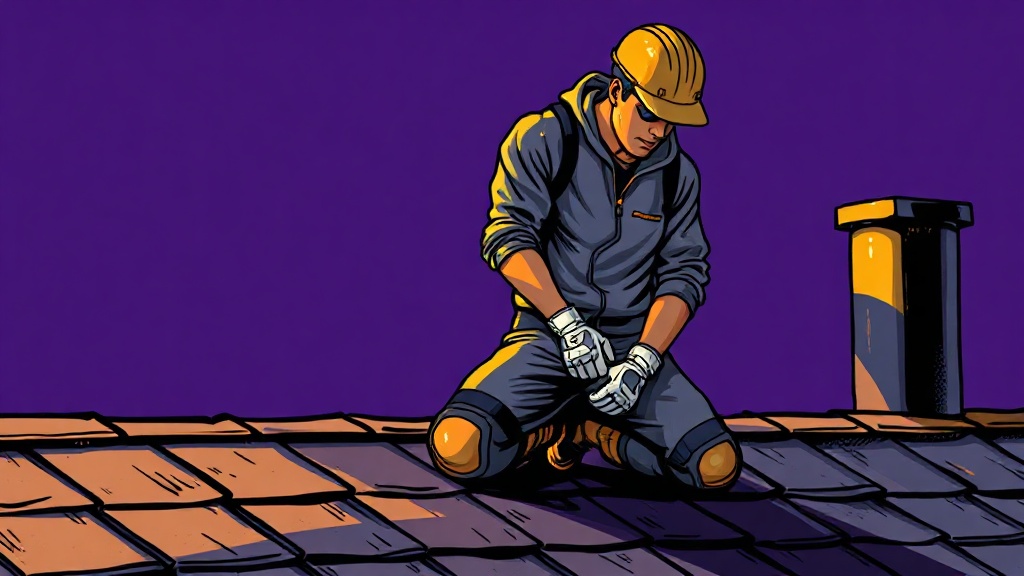
Most trades workers don't think about their knees until something goes wrong. Then they pop some ibuprofen and keep going. That strategy works until it doesn't — and by the time a concrete finisher at 48 can't kneel on a hard floor without pain, the structural damage is already done.
Knee problems in trades work come in three main flavors, each with a different mechanism, different treatment, and different long-term trajectory. Knowing which one you're dealing with changes what you do about it.
32%
Of all nonfatal construction injuries are musculoskeletal disorders, with the knee consistently among the top three injured body parts. (CPWR — Center for Construction Research and Training)
The Three Knee Conditions Trades Workers Get
1. Prepatellar Bursitis ("Housemaid's Knee")
The prepatellar bursa is a small fluid-filled sac that sits directly in front of the kneecap. Its job is to reduce friction as the skin moves over the kneecap during normal activity. When you kneel on a hard surface — a concrete floor, a rooftop, a tile substrate — you put direct, sustained pressure on this sac. Do it enough times and it becomes inflamed: thickened, swollen, and painful to touch.
The visible hallmark is a soft, puffy bulge directly over the kneecap — not deep in the joint, but right on the surface. In acute cases it can be warm and red. The medical name is prepatellar bursitis; the old trades term was "housemaid's knee," from domestic workers who spent hours kneeling on stone floors. Today it's roofers, tile setters, concrete finishers, plumbers, and anyone else whose job regularly puts them on their knees on hard surfaces.
This is a direct pressure injury, not a joint load injury. The mechanism is different from arthritis or meniscus damage: you're not wearing down cartilage inside the joint, you're inflaming a structure that sits outside the joint. This distinction matters for treatment — padding and pressure relief are the primary interventions, not joint-oriented therapies.
2. Patellar Tendinopathy
The patellar tendon connects the kneecap to the tibia and is the primary structure through which the quadriceps muscle transmits force to extend the knee. In trades work involving repetitive squatting, stair climbing with loads, working on pitched roofs (which loads the knee in a sustained partial-flexion position), and repeated kneeling-to-standing cycles, the patellar tendon accumulates microscopic damage faster than it can repair.
Patellar tendinopathy shows up as pain at the bottom edge of the kneecap — specifically the inferior pole of the patella, where the tendon attaches. It's typically worse at the start of activity, eases up after warm-up, and then comes back worse after heavy loading. Stairs, squatting, and kneeling all aggravate it.
Unlike bursitis, this is a load-related injury. The tendon is being asked to do more work than it can handle repeatedly. Treatment centers on load management and progressive tendon loading — not rest alone, which actually causes further degeneration in tendons.
3. Meniscus Wear and Tear
The menisci are C-shaped cartilage pads that sit inside the knee joint, one on the medial (inner) side and one on the lateral (outer) side. They cushion the joint, distribute load, and provide stability. In trades work, repetitive deep squatting, kneeling, and twisting movements gradually degrade meniscus tissue — a process that's different from the acute traumatic tears that happen in sports.
Occupational meniscus degeneration typically presents as pain at the joint line (sides of the knee, not front), sometimes accompanied by a sense of stiffness, occasional clicking, or pain at the extremes of flexion. BLS data shows that occupations requiring sustained kneeling and squatting — tile work, concrete finishing, roofing — have elevated rates of knee musculoskeletal disorders consistent with meniscal loading over time.
A 2015 study in the Scandinavian Journal of Work, Environment and Health found that workers who kneel or squat for more than 1 hour per day have significantly elevated risk of knee osteoarthritis and meniscal pathology compared to workers without such exposures. The dose-response is clear: the more cumulative kneeling hours over a career, the higher the long-term joint damage risk.
Kneeling on Hard Surfaces: Why It's Different from Normal Knee Stress
Normal joint loading — walking, stair climbing, carrying loads — compresses the cartilage inside the knee joint symmetrically. The joint is built for this. The cartilage and synovial fluid are designed to handle compressive load.
Kneeling is different. When you kneel on a hard concrete surface, you're applying direct external pressure to the front of the knee — to the prepatellar bursa, the patellar tendon attachment, and the skin and soft tissue over the kneecap. The joint itself isn't under unusual compressive load; the structures on the front of the knee are under a concentrated external pressure for which they have very limited tolerance.
This is why a construction worker with no knee problems can end up with severe prepatellar bursitis despite being physically strong and well-conditioned. Strength doesn't protect the bursa from direct pressure. Only padding and positional modification do.
Knee Pad Selection: What Actually Matters
Not all knee pads are equal — and the differences matter for the specific conditions you're at risk for.
Hard Cap vs. Soft Cap
| Type | Best For | Weaknesses |
|---|---|---|
| Hard cap (plastic/composite shell) | Rough surfaces, gravel, debris, roofing materials; provides abrasion/puncture protection; good for concrete work | Less comfortable for prolonged sustained kneeling; harder edges can cause focal pressure points if not properly sized |
| Soft cap (foam or gel only) | Smooth floors, tile work, finish carpentry; sustained kneeling where comfort matters; pressure distribution over larger area | No puncture protection; compresses over time; less durable on rough surfaces |
| Hard shell with gel liner | Best of both: protection plus comfort; good general-purpose choice for mixed conditions | Heavier; more expensive |
Foam Density Matters
For soft and hybrid knee pads, foam density directly affects how much pressure actually reaches the bursa. Low-density foam compresses quickly and provides minimal protection after the first few minutes of sustained kneeling. Look for high-density polyurethane foam or gel inserts — these maintain their shape under sustained load and distribute pressure over a larger surface area, reducing peak pressure on the prepatellar bursa.
A minimum of 1 inch of quality foam or equivalent gel is the threshold where pressure reduction becomes meaningful for bursitis prevention. Most budget knee pads have 0.5 inch or less of low-density foam. They feel soft initially and compress to nearly nothing within minutes.
Built-In Knee Pad Pants vs. External Pads
This gets its own article (Knee Pads vs. Built-In Knee Pad Pants), but the quick version: external knee pads are better for variable positioning and tasks where you're moving in and out of kneeling frequently. Built-in knee pad pants stay in position without straps slipping and are better for sustained kneeling where you're not constantly getting up and down. If your pants have built-in pockets designed for insertable pads, use high-quality inserts — the factory foam is often inadequate.
Recovery: RICE, When to Worry, and What the Timeline Looks Like
For acute prepatellar bursitis or patellar tendon flare-ups, the standard starting protocol:
Rest: Reduce kneeling activity for 3–5 days. Complete rest isn't usually necessary — avoiding the specific aggravating motion (kneeling, or the load that triggered tendon pain) while maintaining general activity.
Ice: 15–20 minutes, 3–4 times daily for the first 48–72 hours. For bursitis, ice directly over the swollen bursa. For tendinopathy, ice after activity, not before.
Compression: A compression sleeve can help with bursitis swelling. For tendinopathy, a patellar tendon strap (band worn just below the kneecap) reduces tendon load during activity.
Elevation: When resting, knee elevated above heart level reduces swelling faster. More relevant for bursitis than tendinopathy.
NSAIDs short-term: Ibuprofen 400–600 mg with food, 2–3 times daily for 5–7 days reduces inflammation in bursitis. For tendinopathy, evidence on NSAIDs is more mixed — they reduce pain but may impair the healing response if used long-term. Short courses (5–7 days) are reasonable during acute flare-ups; see the full NSAIDs guide before making this a daily habit.
When to Worry: Bursitis vs. Meniscus Warning Signs
Bursitis that doesn't improve with 2 weeks of RICE and activity modification, develops increasing redness and warmth (septic bursitis — an infection — requires antibiotics or drainage), or becomes very large and tense needs medical evaluation.
Meniscus warning signs that warrant a doctor visit: joint locking (the knee literally gets stuck and won't fully extend), true joint effusion (swelling inside the joint, not just on the surface), sudden sharp pain with twisting or pivoting, or pain that worsens rather than improves after 3–4 weeks of relative rest.
MRI is the standard test for meniscus evaluation. It's expensive — but if a meniscus tear needs surgical repair, finding it earlier leads to better outcomes than grinding on an untreated tear for years.
Long-Term Joint Protection
Strengthening Protocol
Quad and hamstring strength directly determines how much compressive force gets transmitted to the knee joint during activity. Every 10% increase in quad strength reduces the functional compressive load on the patellofemoral joint measurably. This isn't hypothetical — multiple studies in occupational health and sports medicine confirm that quad weakness is a risk factor for both knee osteoarthritis and patellar tendinopathy progression.
The most effective exercises for joint protection in trades workers: terminal knee extensions (straightening the knee from 30 degrees of flexion — low load, high quad activation without the compressive penalty of deep squats), single-leg Romanian deadlifts (hamstring and glute loading without knee flexion), and wall sits (isometric quad loading, joint-friendly). These three compound well and can be done without a gym.
Quad-hamstring imbalance is a specific risk factor: if your hamstrings are significantly stronger than your quads (common in guys who do physical labor but no focused strength work), the tracking of the kneecap is affected and patellar tendon load increases. Train both sides.
Weight Management
Every pound of body weight adds approximately 3–4 pounds of compressive force to the knee joint during level walking, according to biomechanical studies. On stairs and when kneeling, the multiplier is higher. A 20-lb weight difference equals 60–80 lbs of reduced knee joint load per step — and you take thousands of steps per shift. This is not a lecture; it's math. Managing body weight is one of the highest-leverage long-term knee protection strategies available.
Technique Adjustments
When the task allows: sit on a low bench or kneeling stool rather than kneeling on the floor. Rotate kneeling position — from both knees to one knee with the weight shifted — to avoid sustained pressure on the same spot. Take 5-minute standing breaks every 20–30 minutes of continuous kneeling. None of this is always possible on a job site, but building in variation when you can reduces cumulative pressure accumulation.
Frequently Asked Questions
The Bottom Line
Your knees are telling you something every time they swell up after a long day of kneeling on concrete. Most trades workers hear that and respond with ibuprofen and denial until the damage is structural — and by then, you're managing a chronic condition rather than preventing one.
The calculus here is straightforward: quality knee pads cost $30–60 and last years. Knee surgery, recovery time, and lost income cost orders of magnitude more. Strengthen your quads now, wear the pads, and don't ignore swelling that doesn't go away after a weekend of rest.
The guys who make it to 55 still doing physical work aren't tougher than the ones who wear out at 40. They're smarter about protecting the joints that keep them on the job.
Sources: Bureau of Labor Statistics — Injuries, Illnesses, and Fatalities data by body part; CPWR — The Center for Construction Research and Training, Construction Chart Book (musculoskeletal disorders); Scandinavian Journal of Work, Environment and Health (2015) — occupational kneeling and knee osteoarthritis; National Institute for Occupational Safety and Health (NIOSH) — musculoskeletal disorders in construction; American Academy of Orthopaedic Surgeons — prepatellar bursitis and patellar tendinopathy guidelines; Fulkerson JP — Disorders of the Patellofemoral Joint (orthopaedic biomechanics reference).

Written by Tim
Founder of Hard Mile Health. I've spent years in physically demanding work and learned most of what's on this site the hard way — through injuries, bad advice, and a lot of research. I write about what actually works, backed by real studies and personal experience.