
Knee Pads vs. Built-In Knee Pad Pants: A Tradesman's Honest Comparison
8 Hours on Your Knees. Walking Out With a Limp.
I was on a big commercial project doing wire management. Two full days of it. At the end of the second day, I could tell I was walking with a slight limp. That night, lying in bed, my right knee was achy and stiff every time I lifted my leg.
Here's the thing: I came from an engineering desk job. I made the switch to trades work not long ago. My body wasn't conditioned to sustained kneeling on concrete, and I hadn't taken it seriously enough. That second day taught me the difference — fast — between having the right gear and not.
This is what I learned about knee pads vs. built-in knee pad pants for work, written from direct experience on a job site.
The Two-Product System (This Is the Key Insight)
Before I get into the story, here's what I figured out — because it's the actual practical takeaway:
Built-in knee pad pants are your daily baseline. Dedicated knee pads are your heavy-day weapon. They serve different purposes, and the best setup is using both together when the job demands it.
- Regular pants: You're paying for it after 2–3 minutes of kneeling on concrete. Non-starter for any real kneeling work.
- Built-in knee pad pants: Fine for occasional kneeling throughout the day. Light impacts, getting up and down. Not enough for a full day on your knees.
- Milwaukee knee pads (over the pants): All day, no problem. These change the equation entirely.
Nobody told me this. I had to learn it the hard way. Hopefully this saves you a limp.
Day One: Building Racking
First day of the project was building racking for the wire management system. I was up and down constantly — on my knees for a stretch, then back on my feet, moving around. Some kneeling, but mixed with enough movement that it was manageable.
I was wearing the built-in knee pad pants. They were helping — absorbing the lighter impacts and keeping my knees from hitting bare concrete every time I went down. Not completely comfortable, but manageable. I thought I had this handled.
Day Two: Full Day Wire Managing
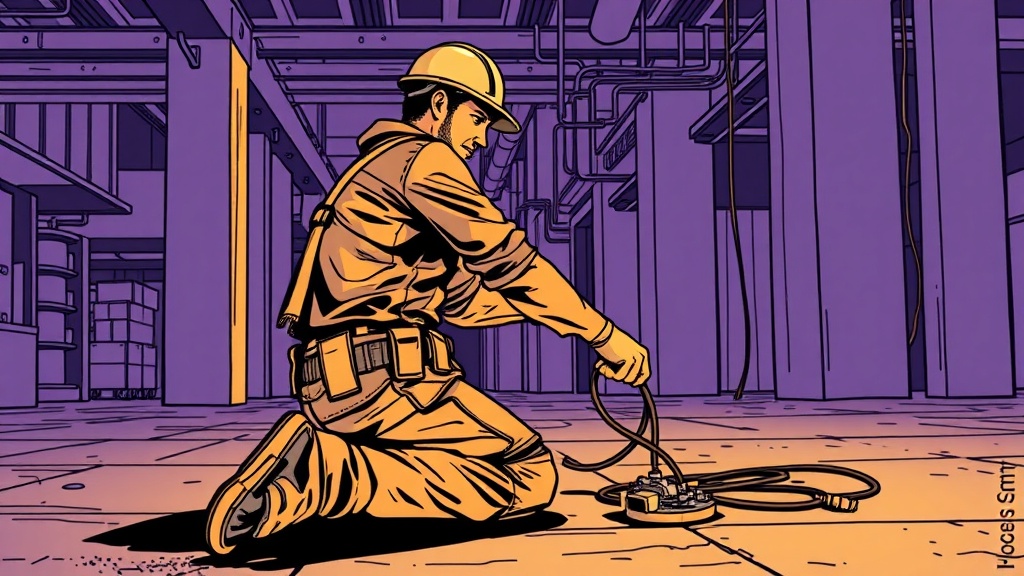
Day two was different. Wire management means you're on your knees, and you stay on your knees. There's no up and down rhythm — you kneel, you work, you move laterally, you kneel again. For hours.
By midday I could feel it. My knees were starting to get wrecked. The built-in pads in the pants weren't doing enough for this kind of sustained pressure. They're built for a different use case.
That's when I added the Milwaukee knee pads on top. Put them on over the pants — took maybe 10 seconds per knee, two straps each — and got back to work.
The relief was immediate. Not gradual. Immediate. Kneeling on concrete went from something my body was quietly protesting to something I barely noticed. I finished the day. But by end of shift I still had that slight limp — the damage from the morning hours had been done before I added the pads.
That night in bed: right knee aching, stiff when I tried to lift my leg. A direct signal from my body that something had been overloaded.
Nobody Else Was Using Knee Pads. I Didn't Care.
Worth saying: I was the only one on that job site with knee pads. Not one other person was using them.
I'm 10+ years older than most of my coworkers. That changes the math. They can maybe get away with beating their joints up for a few years before it catches up to them. I can't afford that math — I'm starting trades later, and I need these joints to last.
Protecting your body for the long haul matters more than looking tough. Knee cartilage doesn't regenerate. The cumulative loading of years of trades work on unprotected knees adds up in ways that aren't reversible. I'd rather be the guy with knee pads than the guy with a knee replacement at 55.
If you're a career switcher coming from a desk job, or you're older than the average person on your crew, this calculus applies to you. The culture on job sites tends to dismiss protective gear as soft. That culture also has a lot of guys with chronic joint problems by middle age.
The Feel Comparison — Honest and Specific
Here's what it actually feels like to kneel in each option:
Regular work pants on concrete: After 2–3 minutes, you're aware of every bit of concrete pressure. Your body starts shifting weight unconsciously. After 10 minutes, you're looking for any excuse to stand up. This is the baseline that people without knee protection are working against all day, every day.
Built-in knee pad pants: Think high school football pants with built-in pads — that's roughly the analogy. They absorb light impacts and take the edge off. For 1–2 hours of occasional kneeling throughout the day, they're genuinely useful. The pressure isn't eliminated but it's reduced to a manageable level. For a full sustained day on your knees, they run out of protection well before you run out of work.
Milwaukee knee pads: Kneeling on a cloud of air. That's not marketing language — that's literally what it feels like compared to the alternatives. The cushioning is dramatic. Barely any impact felt through to the knee joint itself. You stop thinking about your knees and start thinking about your work.
The Practical Details on the Milwaukee Pads
Two straps per pad. Takes about 10 seconds to put on each one. You can tighten them while you're wearing them — which matters because you want to be able to adjust in the middle of work without stopping to take them off.
They slip down occasionally. This is the one real trade-off. When you're moving around a lot — not kneeling, just walking or climbing — they can slide down and need a quick pull-up. Minor annoyance. Not a reason to not use them. Tighten the straps snug and it happens less.
Putting them on over the built-in knee pad pants works perfectly. No compatibility issue, no weird bulk. The strap system works over whatever pants you're wearing.
The Science: Why Sustained Kneeling Wrecks Knees
Your knee joint is one of the most complex load-bearing structures in the body. Cartilage — the smooth tissue that cushions the ends of your bones — absorbs compressive force when you kneel. Unlike muscle, cartilage has almost no blood supply and extremely limited ability to repair itself once damaged.
The problem with trades work isn't any single kneeling session — it's the cumulative loading over months and years. Research on construction workers and flooring installers consistently shows elevated rates of knee osteoarthritis compared to sedentary workers, with the risk scaling up with years of kneeling exposure. The mechanism isn't mysterious: sustained compression on cartilage, day after day, year after year, degrades it faster than the body can compensate.
Knee pads work by redistributing that compressive load — the foam or gel absorbs energy before it reaches the joint, reducing peak pressure on the cartilage with every kneeling contact. It's not eliminating the stress, but it's reducing it with every single knee contact across an entire career. That compounds. More on knee anatomy and cumulative joint load here.
The "I'm young and fine" logic doesn't account for how cartilage degradation works. You don't feel the accumulated damage until the cartilage is substantially worn. By then, the reversible window has closed.
What Actually Helped Recovery
After the hard days: I added the Milwaukee pads and kept sustained pressure off my knees. That worked right away. The aching improved within a day or two once I stopped adding load without protection.
My right knee is still slightly achy — but nowhere near preventing me from walking or sprinting. The early intervention mattered. If I'd kept grinding through without the pads for another week, I don't think the recovery would've been that clean.
Honest Verdict
Built-in knee pad pants are worth having. Wear them every day — they're comfortable, they handle the incidental kneeling, and they give you a reasonable base layer of protection for most work.
Milwaukee knee pads are worth having for heavy knee days. Any day you know you're going to be on your knees for extended stretches — wire work, tile, concrete finishing, anything sustained — throw them on over the pants. 10 seconds. The difference is not subtle.
If you're earlier in your trades career, this feels like optional gear. If you're a career switcher, if you're older than your crew, or if you have any existing knee issues, this is not optional gear. Your future self is the one who pays for the joints you wreck today.
Both Products — What I'm Using
👖 Built-In Knee Pad Pants — Daily Baseline
Your everyday work pants with integrated knee pad pockets. Good for occasional kneeling throughout the day, light impact absorption, and as a foundation under dedicated knee pads on heavy knee days.
- Best for: Mixed work days with some kneeling
- Limitation: Not enough for sustained all-day kneeling on concrete
- Pair with: Milwaukee knee pads on heavy knee days
Opens Amazon.com in a new tab. Affiliate link — we may earn a commission at no extra cost to you.
🦵 Milwaukee Knee Pads — Heavy Day Weapon
Two straps, 10 seconds on, easy to tighten while wearing. Kneels like a cloud of air compared to anything else I've used. Slip occasionally when moving around — minor price to pay. These are what saved my knees on that wire management job.
- Best for: Any day with sustained kneeling — wire work, tile, concrete finishing
- Setup: Strap over whatever pants you're wearing, including built-in pad pants
- Minor drawback: Occasional slippage when walking (retighten as needed)
Opens Amazon.com in a new tab. Affiliate link — we may earn a commission at no extra cost to you.
Frequently Asked Questions
Are knee pads or built-in knee pad pants better for trades work?
Can you wear Milwaukee knee pads over knee pad pants?
How do you know when you need dedicated knee pads vs just knee pad pants?
How long do knees take to recover after a hard day of kneeling on concrete?

Written by Tim
Founder of Hard Mile Health. I've spent years in physically demanding work and learned most of what's on this site the hard way — through injuries, bad advice, and a lot of research. I write about what actually works, backed by real studies and personal experience.