
I Left Engineering for Solar Installation — Here's What It Did to My Body
My Fitness App Thought I Was Training for a Marathon
My move goal is set to 120 active calories per day. On Tuesday, May 26th, I hit 874.
I wasn't at the gym. I wasn't doing anything special. I was at work — installing solar panels on a commercial rooftop. 19,315 steps. 8.69 miles. That's a random Tuesday.
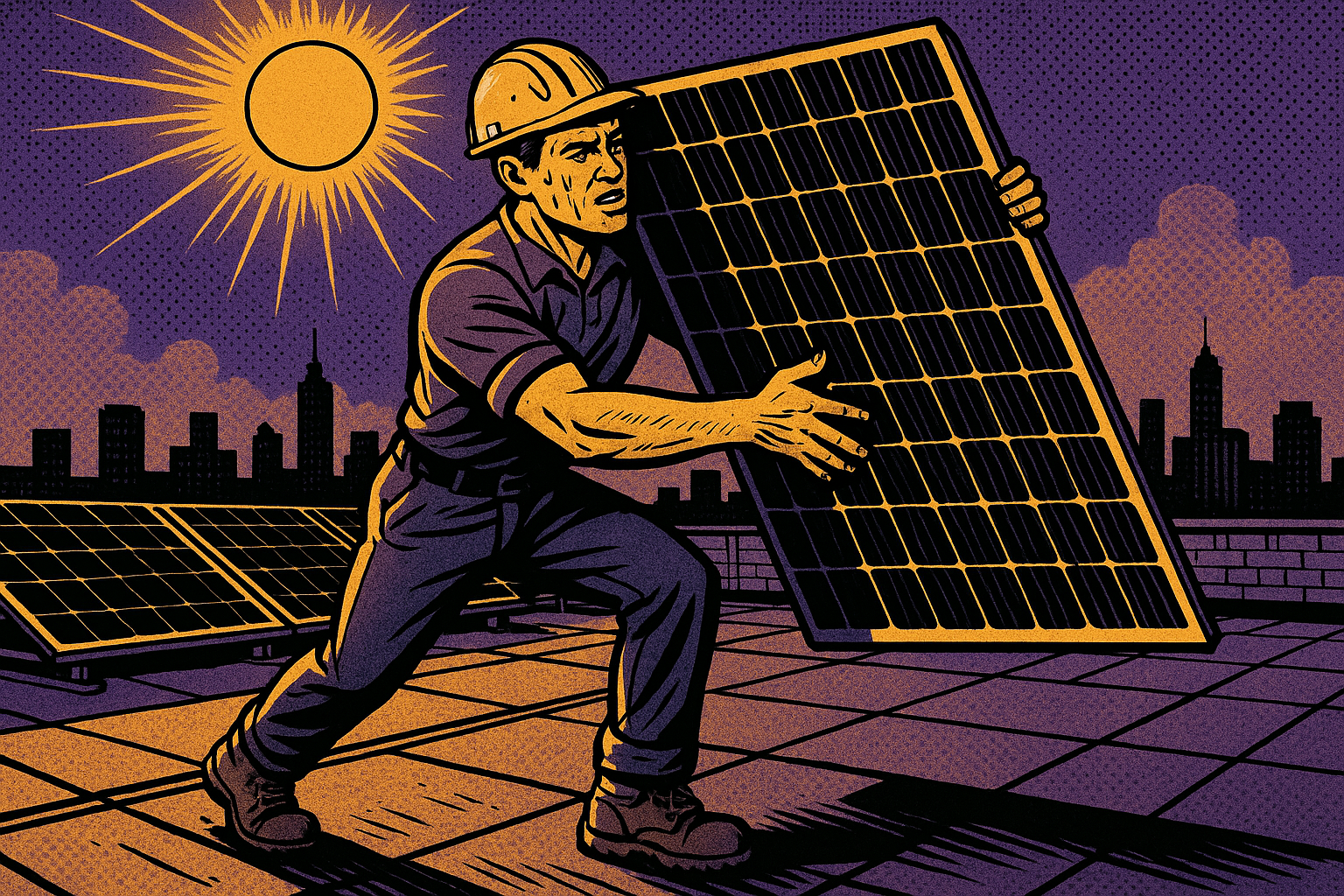
Two years ago, I was a packaging engineer. Remote. Some days I walked from my bedroom to my desk and back. That was it.
That's the short version. The longer version is a ten-year career that started active and ended completely sedentary — and what that arc did to my body before I finally made the switch.
I'm going to tell you what happened to my body when I made the switch — not to sell you on the trades, not to tell you desk jobs are bad, but because I tracked it, and the data is interesting. And because I know there are people sitting in front of a spreadsheet right now wondering the same thing I was wondering.
Ten Years of White Collar — And How It Changed
My career in white-collar work spans about ten years. The first stretch — 2014 to 2019 — was more active. Lab technician-type roles: on your feet, moving around, not chained to a desk. Not physical in the trades sense, but not sedentary either.
Then came the last five years. Engineering roles, progressively more desk-bound. The last three were fully remote. I could roll out of bed, eat breakfast, and be logged in within 30 minutes. I didn't go into the office more than once a week — and often less than that.
Day to day: spreadsheets, meetings, design reviews, a lot of staring at a screen. I might walk out to the manufacturing floor once during a day just to look at something. That was my exercise.
On weekends, maybe once every three weeks, I'd do a mile jog. Maybe.
At my peak — mid-2023, fully desk-bound — I weighed 279 pounds.
What the Last Six Months Looked Like
The last stretch at the engineering job was rough. I'm not going to get into specifics that would identify anyone, but the short version is: I got a solid annual review, then found myself on an impossible project with shifting targets, and then three weeks after raising concerns about workload, I had a "performance discussion" on my calendar. No prior negative feedback. A PIP out of nowhere.
Those final months — May through July 2025 — I was sitting in my chair for ten hours a day trying to hit goals that kept moving. I was so mentally exhausted I wasn't even eating properly. I wasn't exercising. I was just grinding.
My weight actually dropped during that period — from 279 down to around 271 — but for the wrong reasons. That's what chronic stress does. You're not losing fat. You're just not eating.
August 11, 2025
That's when I started in solar. Residential installation, first year.
I remember being surprised by how much I liked it. Not just tolerated it — actually liked it. There's something that resets when your problems for the day are physical and concrete instead of political and abstract. You know exactly what you did at the end of a shift. It's right there. You can see it.
The physical adjustment took a few weeks. Your body isn't used to it. But after that, it became the new normal.
By December 2025, I was at 255 pounds. Down from a 279 peak. No diet. No gym. Just work.
What the Numbers Actually Look Like
I've been tracking with a fitness app since I started. Here's a sample of what recent work days look like:
| Day / Work Type | Total Cal | Steps | Miles |
|---|---|---|---|
| Heavy day — panel hauling, commercial roof | 3,652 | 23,362 | 10.85 |
| Standard day — mixed tasks | 3,412 | 19,315 | 8.69 |
| Light day — wire management | 2,873 | 9,473 | 4.16 |
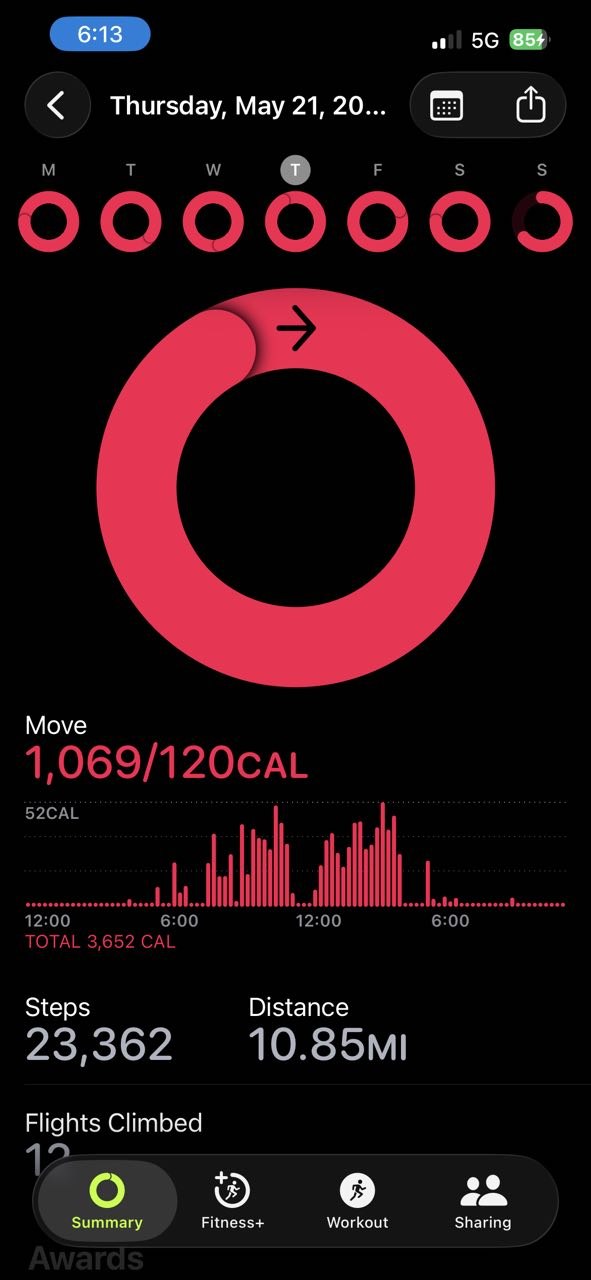
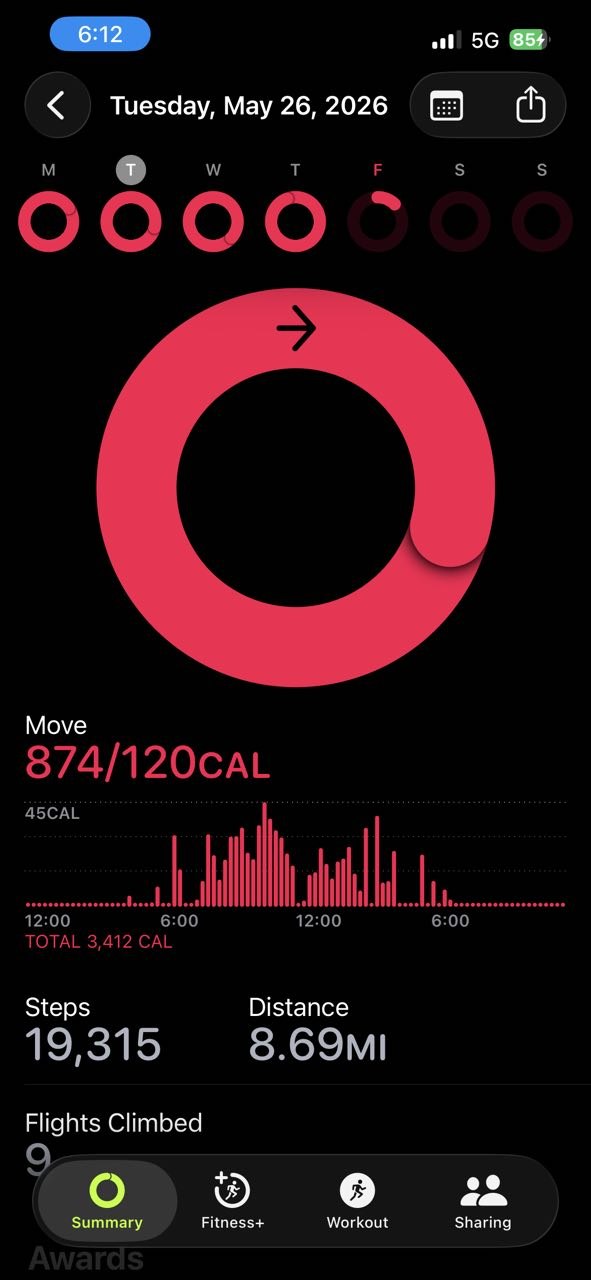
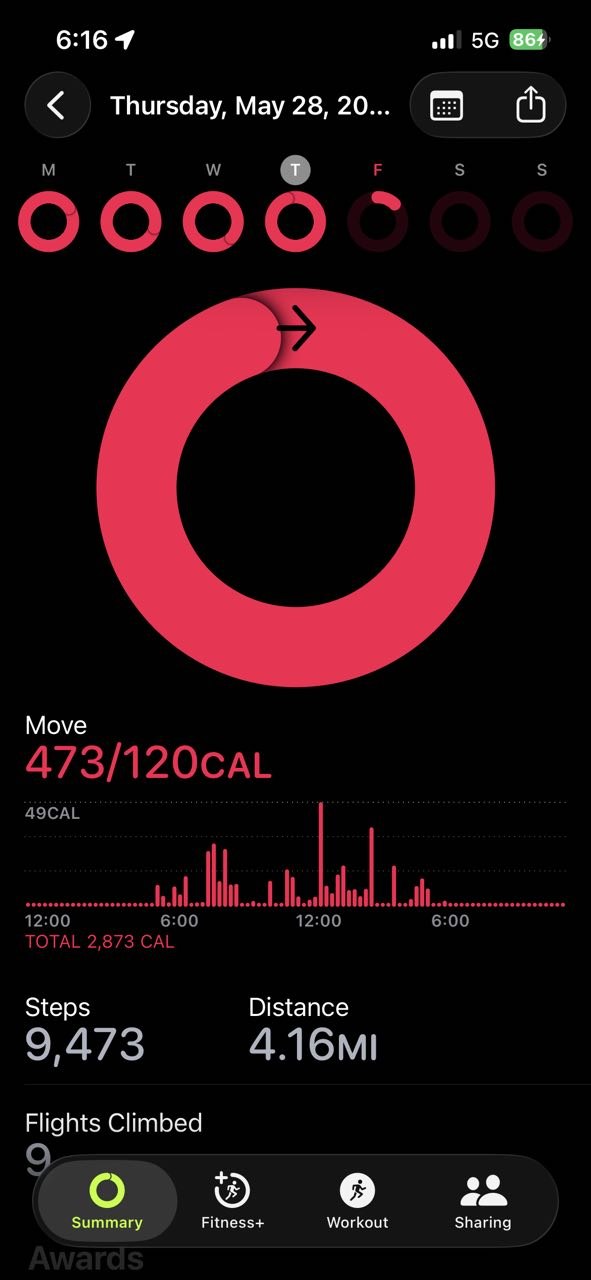
That wire management day — 2,873 calories — is my slow day. Most sedentary office workers burn somewhere between 1,800 and 2,200 calories for an entire day including normal life activity — a range consistent with published TDEE estimates for low-activity adults (National Academies of Sciences, Dietary Reference Intakes). My slowest work day beats that.
My move goal on the app is 120 active calories. I'm regularly hitting 800 to 1,000+ without thinking about it. That's just what the work is.
The Weight History
Here's the honest version of the weight chart:
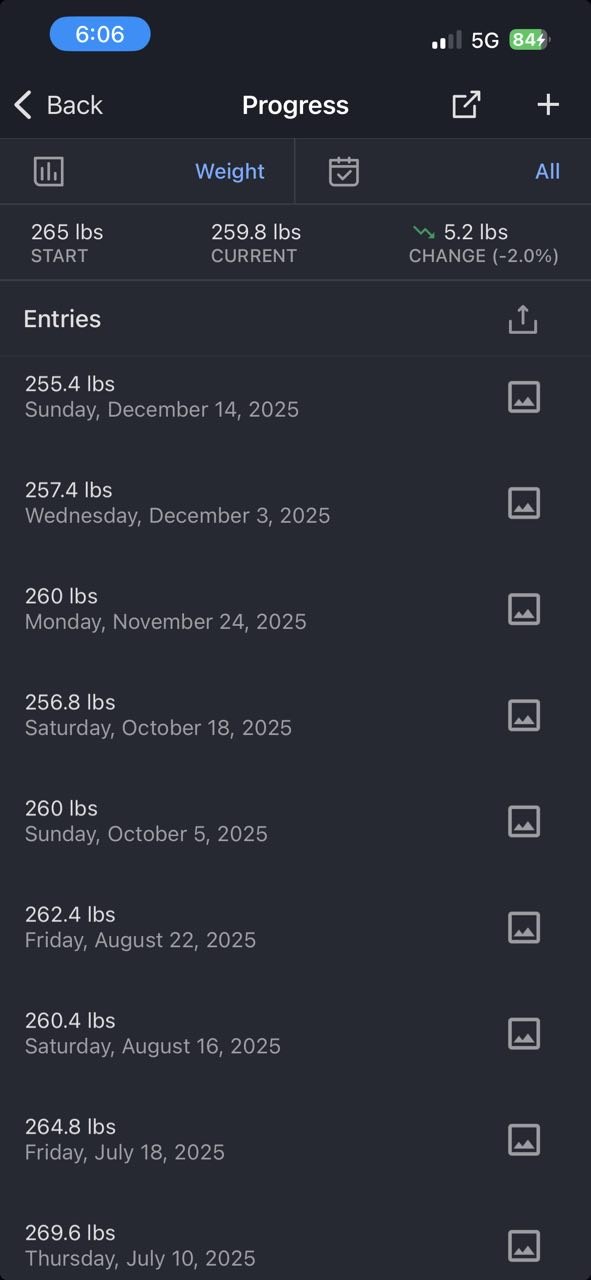
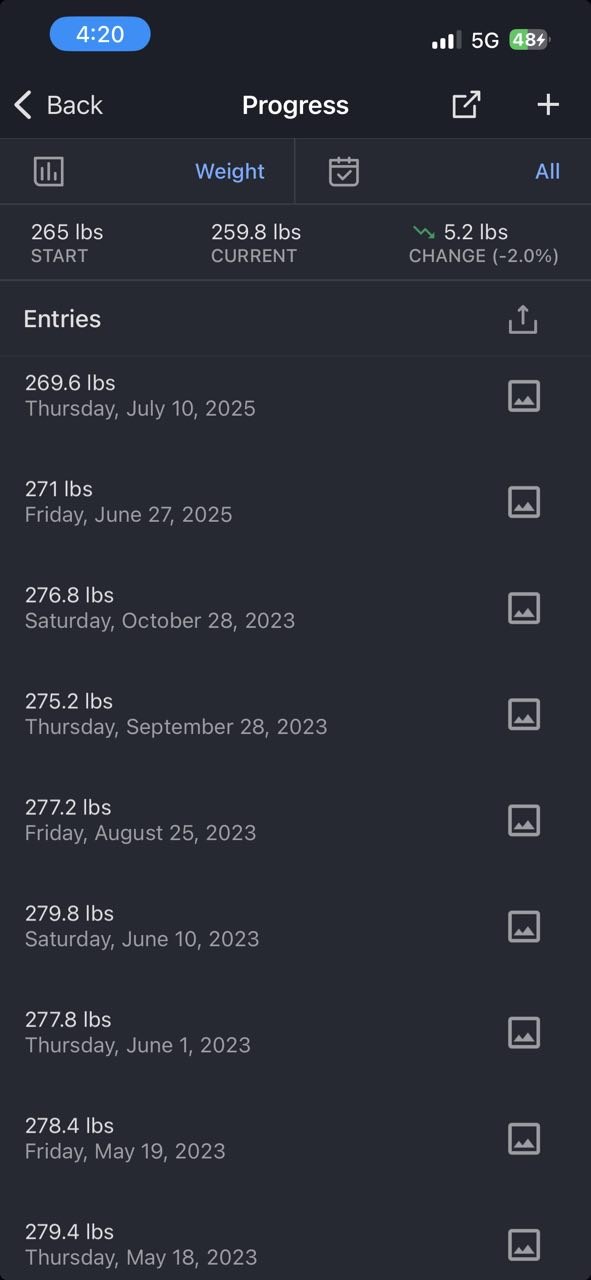
- Mid-2023 (desk job peak): ~280 lbs
- May–July 2025 (stress period): 271 → dropped from not eating, not from health
- August 2025 (started trades): ~269 lbs
- December 2025: ~255 lbs
- Jan 2 – Mar 11, 2026 (laid off): weight crept back up ~5 lbs — no physical work
- March 2026 (back to work): weight stabilized
- May 2026 (current): ~260 lbs
The December low bounced back slightly going into early 2026 — and there's a specific reason for that. I was laid off from January 2nd through March 11th, 2026. No physical work for about ten weeks. The weight crept back up to around 260. When I went back to work, it stabilized there.
That's actually useful data. It confirms the direction of causation: it's the work doing it, not some background lifestyle change. Take the work away, weight comes back. Put the work back, it holds. My diet didn't change meaningfully in either direction.
Net change from peak to now: roughly 20 pounds. No deliberate diet. No gym membership. The work did it.
I also carry a lot of muscle mass naturally, which means I burn more at rest than someone the same weight who's less muscular. That's worth naming — your individual results will vary based on your own baseline. But the direction of change, for most people switching from sedentary office work to physical trades, is going to be the same.
Residential vs. Commercial — They're Not the Same
My first year was residential solar. 2026 I moved to commercial. The difference is significant.
Residential is a high-intensity sprint. You're digging trenches, wiring in hot attics, carrying 60-pound panels up a 28-foot ladder on a 35 to 45 degree pitched roof. Short bursts of brutal effort, then on to the next job. It's varied, it's fast-paced, and it hits you hard in ways you don't expect until you're already sore.
Commercial is more of a sustained grind. Larger rooftops, longer days, heavier sustained loads. At its worst, you're carrying concrete blocks for three to five days straight. Or you're setting up safety rail all day — guard rail base plates weigh 58 pounds each, and you're moving a lot of them. It's not a sprint. It's just relentless. Those 10+ mile days are commercial days. On residential, my typical day was around 3 miles — ranging from 1 mile on a slow day up to 6.55 on the busiest ones.
Both are demanding. They're just demanding in different ways.
This is specific to solar — other trades will have their own version of this calculus. But within solar, which track is right for you depends more on who you are than on easing in. Residential tends to suit people who aren't afraid of sketchy situations — steep roofs, tight attics, heights — and who maybe have a background in something like rock climbing. Commercial is a better fit for people with solid physical endurance who'd rather grind than scramble. That said, most of the installers I work with on commercial jobs are in their 20s, so the lines aren't clean. It's less about age and more about what kind of hard work you're built for.
What Actually Surprised Me
A few things I didn't expect:
Sleep quality. I sleep harder now than I have in years. Physical fatigue and cognitive fatigue feel different at the end of the day. After a desk job I'd lie awake with thoughts still running. After a trades shift I'm out. This matters more than people give it credit for.
The mental health difference. I expected to miss the career. I didn't. The constant low-grade anxiety of corporate environments — the politics, the unspoken evaluations, the moving goalposts — I didn't realize how much of my baseline stress it was generating until it was gone. The work is physically harder. My head is quieter.
Appetite change. When you're burning 3,400 calories a day, you need to eat. I eat more than I did at the desk job. But it's actual hunger, not stress eating or boredom eating. The relationship with food is different when your body is actually using it.
The Honest Take
I'm not going to tell you the trades are for everyone. The pay trajectory is different. The physical wear over a career is real and worth taking seriously — this site exists partly because of that. You're trading one set of tradeoffs for another.
But if you're sitting at a desk right now, stressed out, not moving, watching your weight creep up and wondering what it would do to your body to actually use it for work — the answer, at least in my case, was: a lot. And most of it was good.
Twenty pounds off a three-year peak. Better sleep. Quieter head. And a fitness app that thinks I'm training for something when I'm just doing my job.
Frequently Asked Questions
Does working in the trades help you lose weight?
How many calories do you burn working solar installation?
Is solar installation physically demanding?
What happens to your body when you switch from a desk job to the trades?
Did you regret leaving engineering for the trades?

Written by Tim
Founder of Hard Mile Health. I've spent years in physically demanding work and learned most of what's on this site the hard way — through injuries, bad advice, and a lot of research. I write about what actually works, backed by real studies and personal experience.