
White Collar to Blue Collar: 5 Culture Shocks Nobody Warns You About — Hard Mile Health
Nobody gives you a transition guide when you leave the office for a job site. One week you're sitting through a mandatory HR training video about workplace behavior. The next, you're on a crew where that same "behavior" is just how guys say good morning. The work is different. The pay structure is different. But the part nobody talks about is the culture — and if you're not ready for it, it'll throw you off.
This isn't about judging either world. It's about knowing what you're walking into. Here are five real culture shocks from someone who made the switch.
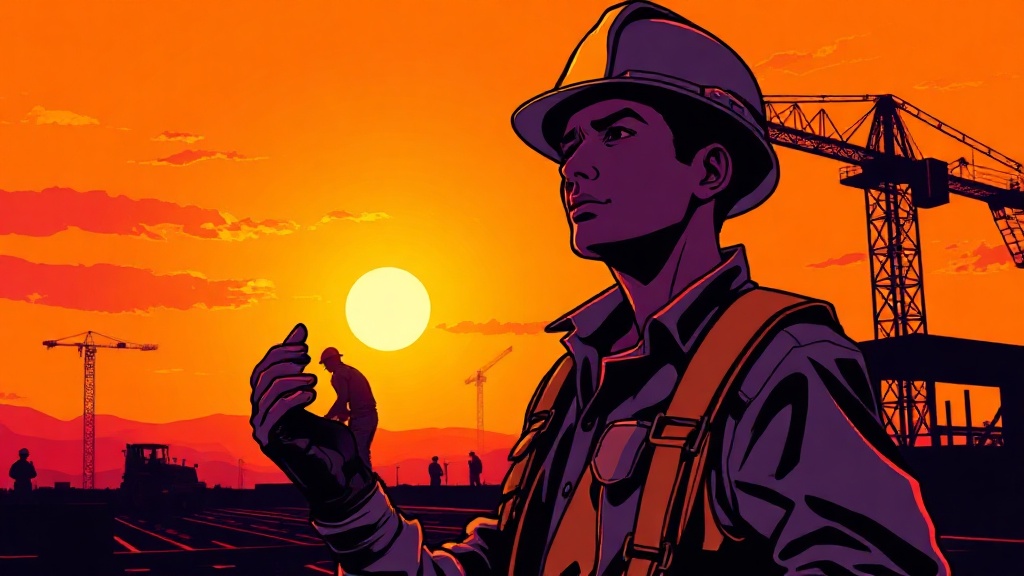
1. The People Are Nothing Like Your Office Coworkers
In the office, you might have lunch with your immediate team — same background, same education level, probably grew up in the same region. Homogenous. Comfortable. Predictable.
On a job site, you work alongside everyone. Convicted felons. Immigrants who came here from the Middle East looking for a better life. Veterans. People with GEDs and people with degrees who realized a desk wasn't for them. The socioeconomic and cultural range is wider than anything most offices contain.
That's not a warning — it's genuinely one of the better parts of the switch. You'll hear perspectives you'd never encounter in a corporate environment. The conversations are more interesting. The life experience in the room is deeper.
Bottom line: Leave your assumptions at the gate. The guy who teaches you the most might be the one with the most unusual background.
2. HR Doesn't Live Here
Every office job comes with the annual ritual: a mandatory video on sexual harassment, workplace discrimination, how to report concerns. You watch it. You click "I acknowledge." You move on.
The reason companies do this isn't because they care deeply about your comfort. It's because they want to be able to say, in a lawsuit, that they trained you. It's liability management dressed up as corporate culture.
On a job site, that apparatus doesn't exist. Guys joke. Constantly. The humor can be crude, politically incorrect, and would make an HR department physically ill. But here's the thing — it's usually not malicious. It's how people bond when they're doing hard physical work together for eight-plus hours a day. The jokes are the social glue.
If you come in with a filter still attached from office life, you're going to feel like an outsider. The adjustment isn't about lowering your standards — it's about recognizing that the social contract is different. Problems get resolved face to face, not through a reporting portal.
Bottom line: You don't have to join in. But you do have to stop flinching.
3. Respect Is Earned in the First Hour, Not the First Quarter
In an office, respect often tracks with title, tenure, and the politics of being visible to the right people. Performance reviews. Being in the right meetings. Managing perception.
On a job site, it happens faster and it's more honest. The foreman gives you a task. You do it without screwing around, you do it right, and you come back ready for the next one. That's it. Do that consistently for a week and you're in.
The flip side is equally true. The guy who wanders off and starts doing some random task that wasn't assigned, who's on his phone, who complains about the conditions — everyone notices. And they remember.
One thing that actually earns disproportionate respect: anticipating the next need. You're helping pull wire through conduit. One spool is done. You don't wait to be told — you're already helping unravel the next one. They're going to need electrical tape next, so you're already looking for it. Then duct tape. It sounds small. To the journeymen watching, it signals that you're present and thinking, not just showing up to collect hours.
The respect is real when you earn it. One journeyman — the company trainer for all apprentices — pulled aside two other electricians at lunch and said: "Tim, we want to keep Tim. We like Tim." That's not something you hear in an office after three weeks.
Bottom line: Show up on time. Do your work. Stay on task. Anticipate. Those four things get you further on a job site than a year of office politics.
4. Your Body Has No Idea What Just Happened
Most people who switch from office work to the trades have some athletic background. They lift, they run, they're not sedentary. It doesn't matter. Your body is still going to get wrecked in ways you didn't expect.
The first few weeks, you'll be sore in places you've never been sore — even if you've trained your whole life. Specific muscles in your feet you didn't know could be sore. Stabilizers in your legs that gym work never really hits. Grip. Shoulders. The cumulative load of eight hours of physical work hits differently than an hour in the gym.
The biggest difference from regular training: you don't get a rest day. You're sore from yesterday, and today is another eight hours. It's closer to the experience of starting to lift for the first time, except instead of taking two days off to recover, you go straight back in.
What actually helps:
- Sleep is the top priority. It's also the cheapest recovery tool you have. Magnesium glycinate two hours before bed helps substantially — deeper sleep, less grogginess in the morning. That's a meaningful edge when the alarm goes off at 5 AM.
- Hydration isn't optional in the heat. Early summer before you're acclimated is the danger window. Electrolyte packets in your water bottle, not just plain water. You're sweating more than you realize.
- Sun hoodies over regular shirts. Counterintuitive, but a good sun hoodie in summer actually keeps you cooler than a t-shirt. It catches the breeze, that breeze hits the back of your neck, and UV protection means you're not burning through the afternoon. Highly recommended once you try it.
- Morning stretch routine. Many crews do this together before the day starts. Do it. Your joints will feel the difference by week three.
Bottom line: The physical side of trades work isn't just about being "tough enough." It's about recovering intelligently so you can keep showing up. That's the part nobody talks about.
5. You Might Actually Like It More
This one surprises people. The office has a lot going for it — climate control, intellectual challenges, a career ladder with some predictability. But it also has a lot of invisible weight: inbox anxiety, meeting fatigue, the performance of being seen to be productive. You can work an eight-hour day and not be entirely sure what you actually accomplished.
On a job site, at the end of the day, you can see what you built. The conduit is run. The blocks are laid. The work is tangible in a way that most office output never is.
The camaraderie is also real. It's different from office friendships — forged faster, based on shared physical experience and mutual dependence. You trust the guy next to you because you've watched him work. That kind of respect isn't manufactured by a team-building exercise.
A lot of white-collar guys who make the switch say the same thing: they didn't expect to like it this much. The money is different, the path is different, but the daily satisfaction of doing real physical work with people you actually respect is hard to replicate behind a desk.
Bottom line: Go in with an open mind. You might find that the thing you thought was a step down is actually a better fit for who you are.
One Final Piece of Advice
If you're making the switch and you want one thing to hold onto for the culture side: grow thick skin and learn to give it back as good as you take it. That's it. No polish required.
The physical side — the sore muscles, the heat, the early mornings — you'll adapt to that. Your body is built for it. The culture is the part that actually trips people up. Know what you're walking into, and you'll be fine.
Frequently Asked Questions
What is the biggest culture shock going from office work to the trades?
The biggest shock for most people is the diversity of personalities and the directness of communication. On a job site you'll work alongside convicted felons, immigrants, veterans, and everyone in between — and everyone talks to each other straight, without the filtered, HR-managed tone of office life. It takes some adjustment, but most people find it refreshing.
Is blue collar work culture really that different from office culture?
Yes, significantly. Office culture is built around managing perception — emails, performance reviews, HR policies. Job site culture is built around competence and trust earned through action. Titles matter far less. What you can actually do, how hard you work, and whether you show up when it's hard — that's what earns respect.
How do you earn respect on a job site?
Show up on time, work hard, stay on task, and be willing to do the jobs nobody else wants. Anticipate what's needed next instead of waiting to be told. Don't do random tasks that weren't assigned. And be able to give and take banter without taking it personally. Respect on a job site is earned through consistent action, not job title.
What should I know about job site humor before switching to the trades?
Job site humor is direct, often politically incorrect by office standards, and serves as a bonding mechanism. If you can't take a joke and fire one back, you'll have a hard time fitting in. There's also a strong culture of not snitching — problems get resolved face to face. Coming in with an HR mindset will make you an outsider fast.
How does the physical toll of trades work compare to office work?
The physical demand is in a different category. You'll be sore in muscles you didn't know you had — specific foot muscles, stabilizers in your legs, grip muscles. The difference from gym soreness is that you don't get a rest day. You go back and do it for eight more hours. Prioritizing sleep and hydration from day one is critical to surviving the first few weeks.
Written by Tim
Founder of Hard Mile Health. I've spent years in physically demanding work and learned most of what's on this site the hard way — through injuries, bad advice, and a lot of research. I write about what actually works, backed by real studies and personal experience.