
Heat Acclimation for Trades Workers: What's Actually Happening to Your Body — Hard Mile Health
Every summer it happens the same way. You start the season not quite ready for the heat, and the first few weeks grind you down in a way that has nothing to do with being out of shape. Your body just hasn't adjusted yet — and until it does, you're working at a real disadvantage.
Heat acclimation is a physiological process. Your body needs time to increase plasma volume, start sweating earlier, and lower your resting core temperature. That takes 7 to 14 days according to NIOSH research. Until then, you sweat more than usual, recover slower, and feel worse than you should — even if you're doing everything else right.
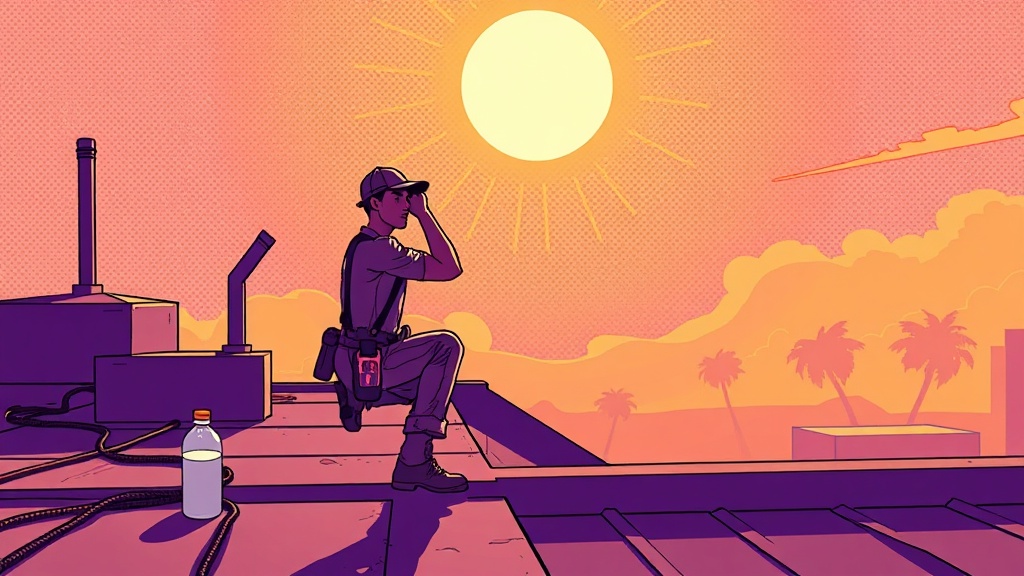
What Being Unacclimated Actually Feels Like
The most obvious sign is how much you sweat. When you're not acclimated, your body dumps fluid fast — not efficiently, just fast. Last season, after starting late when everyone else on the crew was already adjusted, the sweat was soaking through pants at the knees. Not just a damp shirt — visibly wet pants at the knees from exertion. That's not normal for most people's experience in an office or a gym. That's what unacclimated physical labor in summer heat looks like.
The other thing is the sluggishness. A 70-degree overcast day with a breeze is a completely different physical experience than a humid 85-degree day in direct sun. Energy levels drop. Tasks that feel routine in mild weather feel heavy. You can be getting solid sleep, taking magnesium, doing everything right — and you still wake up feeling like you didn't fully recover. That's normal in the first week or two. It's not a fitness problem. It's an adaptation timeline.
It typically takes a couple hours on the job site in the morning before the body finds its rhythm. Expect that. Plan for it. It passes.
Bottom line: The first two weeks of summer heat are a known physiological adjustment period — not a fitness test. Treat them accordingly.
Hydration: The Numbers Most Guys Don't Know
OSHA's standard recommendation is about one cup of water every 15 to 20 minutes during heavy work in the heat — roughly a liter per hour. Most trades workers in summer are nowhere near that.
In practice, a full day on a hot job site — especially a flat roof or any exposed surface — can mean going through five or six 1,500 ml water bottles. That's 7.5 to 9 liters in a shift. That's not excessive. That's what the work demands.
The problem with drinking that much plain water: at that volume, you're flushing electrolytes — sodium, potassium, magnesium — out faster than you can replace them with food. That's when cramps start. That's when the headache hits at the end of the day. That's when you're exhausted in a way that sleep doesn't fix.
Electrolyte packets in the morning and at the end of the day make a real difference. Not the sugar-heavy sports drinks — actual electrolyte supplements with sodium and potassium. Options like LMNT or Liquid IV are worth keeping in your bag. Morning and night, especially during the acclimation period.
One practical reality of job site hydration: you're not carrying your water bottle with you everywhere. On a large job site, the bottle stays at the staging area or access point. That means you're drinking in bursts when you're thirsty — which means you're already slightly behind when you drink. Thirst is a lagging indicator. By the time you feel parched, you're already dehydrated. The fix isn't complicated: drink more at each opportunity and don't skip the electrolytes.
Bottom line: Plain water at high volumes isn't enough. Add electrolytes morning and night. Drink before you're thirsty, not after.
The Nose Test — A Warning Sign Nobody Talks About
Here's something you won't find in a textbook but anyone who's worked outdoors in the heat knows: when the bridge of your nose starts feeling like someone is poking needles through it, that's dried sweat salt. It means the sweat has evaporated and left a salt crust on your skin. That sensation is a reliable early warning that you've been losing fluid faster than you're replacing it.
When that happens: tilt your head back, dump water on your face. Get your shirt wet. The moisture wicking material will do its job — evaporate the water and pull heat away from your core. It's not sophisticated, but it works, and it works fast.
Bottom line: The needle feeling on your nose means you're already behind on hydration. Stop and fix it before it gets worse.
What You're Wearing Matters More Than You Think
The instinct in the heat is to strip down — no shirt, or as little as possible. On a job site with direct sun exposure, that's usually the wrong call.
A quality sun hoodie with a UPF rating blocks UV radiation that would otherwise generate direct heat in your skin. The fabric is thin enough that airflow isn't significantly restricted. And the hood, when you use it in direct sun, catches wind and channels it to the back of your neck — which is one of the best spots on the body for heat dissipation. When it's overcast or you're in shade, hood down. When the sun is on you, hood up. It's that simple. This is what I use on site — thin, easy to move in, and it actually works. $27 for a 3-pack — I bought two packs to cover the whole work week.
Ever wonder why people in the desert wear robes — covering almost everything? They're onto something. Full coverage blocks the sun's radiant heat from hitting your skin directly, and loose fabric creates a small convective layer that moves air against your body. The sun hoodie works on the same principle. There's a catch though: if you're working in dead still air with no breeze, the hoodie method kind of sucks. When that happens, switch to a hat and a cooling towel on the back of your neck — the evaporative cooling goes straight to your carotid, which drops your core temp fast.
A short haircut helps more than people expect. Thick hair holds heat. Short sides mean the air reaches your scalp and ears, which matter for cooling. Safety sunglasses complete the sun protection without adding heat load.
If you're wearing cotton, switch. Cotton holds sweat against your skin instead of wicking it away. Moisture-wicking synthetics are cooler in the heat because the evaporation is what does the cooling work.
Bottom line: More coverage with the right fabric is better than less coverage with the wrong one. Sun hoodies, moisture-wicking base layers, short hair, sunglasses.
The Warning Sign That Most Guys Push Through
There's a specific pattern that shows up in heat-stressed workers: you're doing a repetitive physical task — hauling materials, climbing a ladder, carrying heavy loads — and with each repetition, your heart is taking longer to recover. First trip up the ladder, heart rate climbs and comes back down. Fifth trip, it's climbing faster and recovering slower. Tenth trip, it's not really coming back down between efforts.
Most experienced trades workers recognize this feeling. Most push through it anyway because the job isn't done.
That's the moment to stop. Carrying solar panels up a ladder on a hot Friday afternoon — not breathing hard, technically capable of continuing — but every trip up the chest is pounding faster. That's your cardiovascular system under heat stress, not just exertion. The fix is simple: stop the repetitive motion, raise your arms above your head in a cross position, take slow deep breaths, and let your heart rate come back down before continuing. It takes two to three minutes. It might prevent a trip to the ER.
The body will tell you when it's overloaded. The problem is that trades workers are trained to ignore discomfort. Heat stress is different from muscle fatigue — it's systemic, it compounds, and it can escalate fast.
Bottom line: If your heart is racing faster with each rep and not recovering between efforts, that's heat stress. Stop. Arms up. Breathe. Get water with electrolytes. Get shade if possible.
Crew Culture and the Shade Station Problem
Individual heat management is mostly on you. But crew culture shapes a lot of it.
A well-stocked crew keeps water available on site — multiple coolers, ice, easy access. That basic infrastructure makes a difference. What most job sites don't have is a dedicated shade station: a canopy or tent where workers can step out of direct sun for a few minutes without walking off the roof or leaving the work area. On a large flat roof in August, having a shaded spot to stop for three minutes is the difference between a worker who catches a problem early and one who ends up sitting on a cooler looking pale.
If you're running a crew or have any input on site setup, a pop-up canopy positioned near the water is worth it. It gets used. One caveat for flat roof work specifically: anchoring is a real issue. You'll need ratchet straps and bricks — which most crews have in abundance for the first month of a job, but the bricks tend to disappear by the end. Plan for that if you're setting one up mid-project.
Bottom line: Good water access is baseline. A shade station is the upgrade most job sites skip and shouldn't.
Frequently Asked Questions
How long does it take to acclimate to working in the heat?
Research from NIOSH suggests full heat acclimation takes 7 to 14 days of progressive heat exposure. During that window your body increases plasma volume, starts sweating earlier, and lowers your core temperature at rest. Until acclimation is complete, expect to sweat significantly more, feel more sluggish, and recover more slowly overnight even with adequate sleep.
How much water should a trades worker drink in the heat?
OSHA's general recommendation is about 1 cup (8 oz) of water every 15 to 20 minutes during heavy work in the heat — roughly a liter per hour. In practice, trades workers doing heavy physical labor on hot days can go through 7 to 9 liters in a shift. Plain water at that volume is not enough — electrolytes are essential to replace sodium and potassium lost through sweat.
What are the early warning signs of heat exhaustion on a job site?
Early signs include heart rate climbing faster than normal with repeated exertion, heavy sweating that doesn't seem to be cooling you down, feeling sluggish or mentally foggy, and muscle cramps. A subtle but reliable sign: if the bridge of your nose starts feeling like needles — that's dried sweat salt accumulating, which means you've been losing fluid faster than you're replacing it. Stop, hydrate with electrolytes, and get out of the sun.
Does a sun hoodie actually help in the heat?
Yes, for most workers a quality UPF sun hoodie is cooler than no shirt in direct sun. It blocks UV radiation that generates heat in your skin, and thin performance fabric wicks sweat while allowing airflow. The hood catches wind and channels it to the back of your neck, which is one of the most effective spots for cooling. When it's overcast or shaded, hood down is usually more comfortable.
What should I do if my heart is racing on a hot job site?
Stop the activity that's driving the exertion. Raise your arms above your head — this opens the chest and makes breathing easier. Take slow, deep breaths until your heart rate comes down. Move to shade if possible and drink water with electrolytes. An elevated resting heart rate that doesn't recover between tasks is a warning sign that your body is heat-stressed. Don't push through it.
Written by Tim
Founder of Hard Mile Health. I've spent years in physically demanding work and learned most of what's on this site the hard way — through injuries, bad advice, and a lot of research. I write about what actually works, backed by real studies and personal experience.